⚠️ Even Real Microsoft Emails Are Being Used for Scams - Here’s How to Stay Safe
Scammers are abusing real Microsoft email addresses. Learn how to tell if an email is legit - even when the sender looks trusted.
Even Emails From Microsoft Can Be Scams. Here’s Why That Matters.
If you’ve ever asked yourself:
- Is this email legit?
- Is this email a scam even though it’s from Microsoft?
- Can scam emails come from real email addresses?
You’re not alone - and unfortunately, the answer in 2026 is yes.
A recent investigation by Ars Technica confirmed a worrying trend: 👉 scam emails are now being delivered from real Microsoft email addresses, not spoofed or fake lookalike domains.
You can read the original report here: 🔗 https://arstechnica.com/information-technology/2026/01/theres-a-rash-of-scam-spam-coming-from-a-real-microsoft-address/
This development changes how we all need to think about email safety.
---
How the Microsoft Email Scam Works
Scammers are abusing legitimate Microsoft services (such as automated Microsoft Power BI notifications) to send emails that:
- Come from `@microsoft.com`
- Pass SPF, DKIM, and DMARC checks
- Bypass most spam filters
- Land directly in your inbox
These emails often pose as:
- Payment confirmations
- Subscription renewals
- Security or billing alerts
---
A Real Example We Tested With IsThisSpam
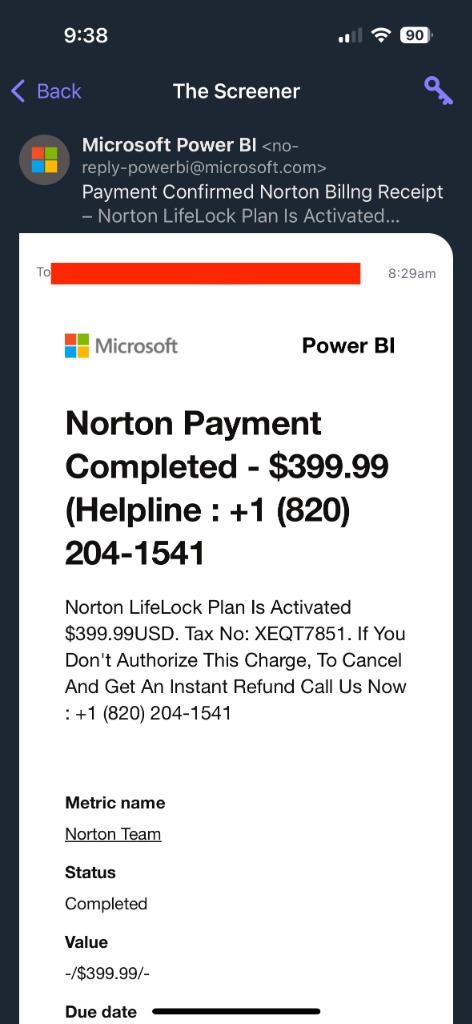
Microsoft Power BI Scam Email Screenshot
Sender: `no-reply-powerbi@microsoft.com` Subject: Payment Confirmed – Norton Billing Receipt Amount: $399.99 Action Requested: “If you don’t authorize this charge, call immediately”
At first glance:
- ✔ Real Microsoft domain
- ✔ Professional formatting
- ✔ No obvious spelling errors
But when checked using IsThisSpam, the verdict was clear:
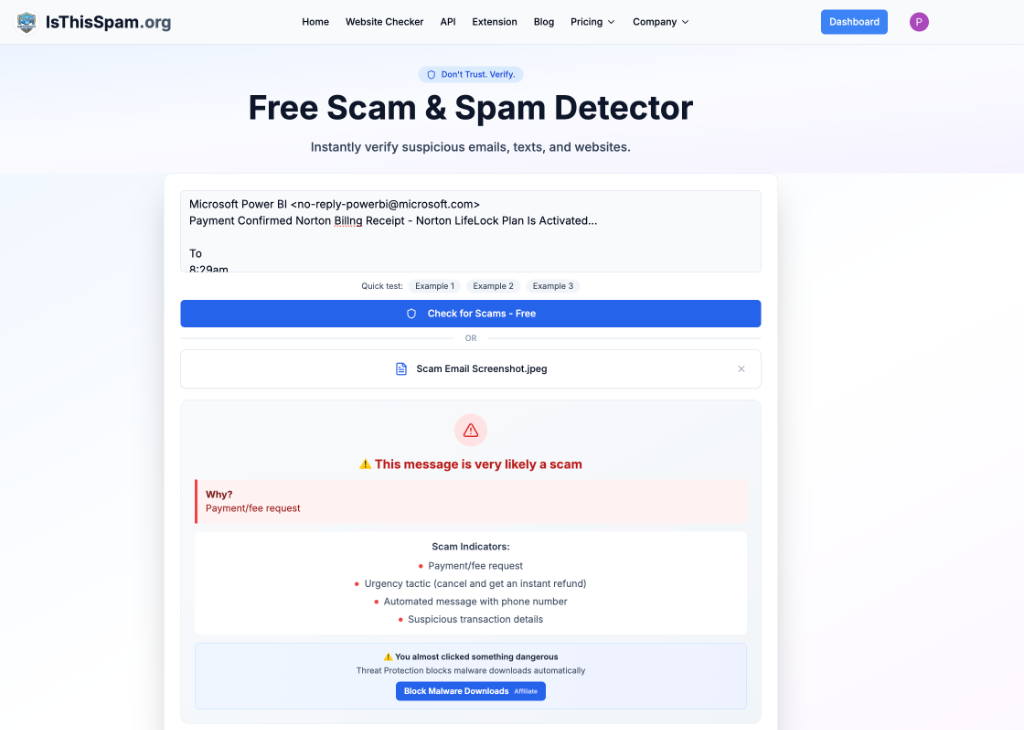
IsThisSpam Analysis Result
⚠️ This message is very likely a scam
---
Why This Email Is Still a Scam (Despite a Legit Sender)
1. Cross-Brand Billing Confusion
Microsoft does not bill customers for Norton or Norton LifeLock subscriptions.
Mixing trusted brands is a classic scam technique designed to reduce skepticism.
2. Panic-Driven Refund Language
Scam emails rely on urgency:
- “If you don’t authorize this charge…”
- “Call now to cancel”
- High, round dollar amounts like $399.99
These are strong indicators of a refund scam email.
3. Phone-First Social Engineering
Legitimate companies do not ask you to resolve billing disputes via phone numbers embedded inside emails.
Scammers want to move you to a phone call, where pressure tactics are more effective.
Stop Guessing. Know if it's a scam instantly.
Protect yourself with our deep AI analysis. Choose the safety plan that fits your security needs.
One-Time Investigation
Need help with one suspicious message?
- One complete AI investigation
- Evidence and reasoning
- PDF report
- Secure Stripe checkout
Ultimate Personal
Complete AI scam protection for everyday life.
- Unlimited email, SMS and website scam checks
- Unlimited website scanning
- AI investigations with detailed explanations
- Protect up to 5 personal devices
Why Traditional Spam Filters Miss These Emails
Most spam filters focus on:
- Sender reputation
- Domain trust
- Authentication checks
When those pass - as they do here - the email is treated as safe.
But authentication proves who sent the email, not why it was sent.
That’s the loophole scammers are exploiting.
---
How IsThisSpam Detects Legit-Looking Scam Emails
IsThisSpam analyzes more than just the sender address.
It evaluates:
- Billing and brand inconsistencies
- Known refund-scam patterns
- Urgency and fear-based language
- Phone-number manipulation
- Historical scam templates
This allows IsThisSpam to flag emails that look legitimate but behave like scams.
---
What To Do If You Receive a Suspicious Microsoft Email
If an email claims:
- A payment you don’t recognize
- A subscription you didn’t purchase
- An urgent refund or cancellation
Do not: ❌ Call the number in the email ❌ Click links or buttons ❌ Reply to the sender
Instead:
1. Copy the email text or upload a screenshot 2. Run it through IsThisSpam 3. Verify charges only by logging directly into the official website - never via email instructions
---
The Bigger Picture: “Legit Sender” No Longer Means Safe
As Ars Technica’s report makes clear, scammers no longer need fake domains.
They’re abusing real platforms to deliver fake intent.
That means:
- Recognized sender ≠ safe
- Logos ≠ legitimacy
- Domain trust ≠ scam-free
---
Final Takeaway
If you’re ever thinking:
- Is this email a scam?
- Is this really from Microsoft?
- Is this payment confirmation legit?
Pause before reacting.
👉 Check it first with IsThisSpam.
Because today, even real email addresses can be used to scam.
Stop Guessing. Know if it's a scam instantly.
Protect yourself with our deep AI analysis. Choose the safety plan that fits your security needs.
One-Time Investigation
Need help with one suspicious message?
- One complete AI investigation
- Evidence and reasoning
- PDF report
- Secure Stripe checkout
Ultimate Personal
Complete AI scam protection for everyday life.
- Unlimited email, SMS and website scam checks
- Unlimited website scanning
- AI investigations with detailed explanations
- Protect up to 5 personal devices